
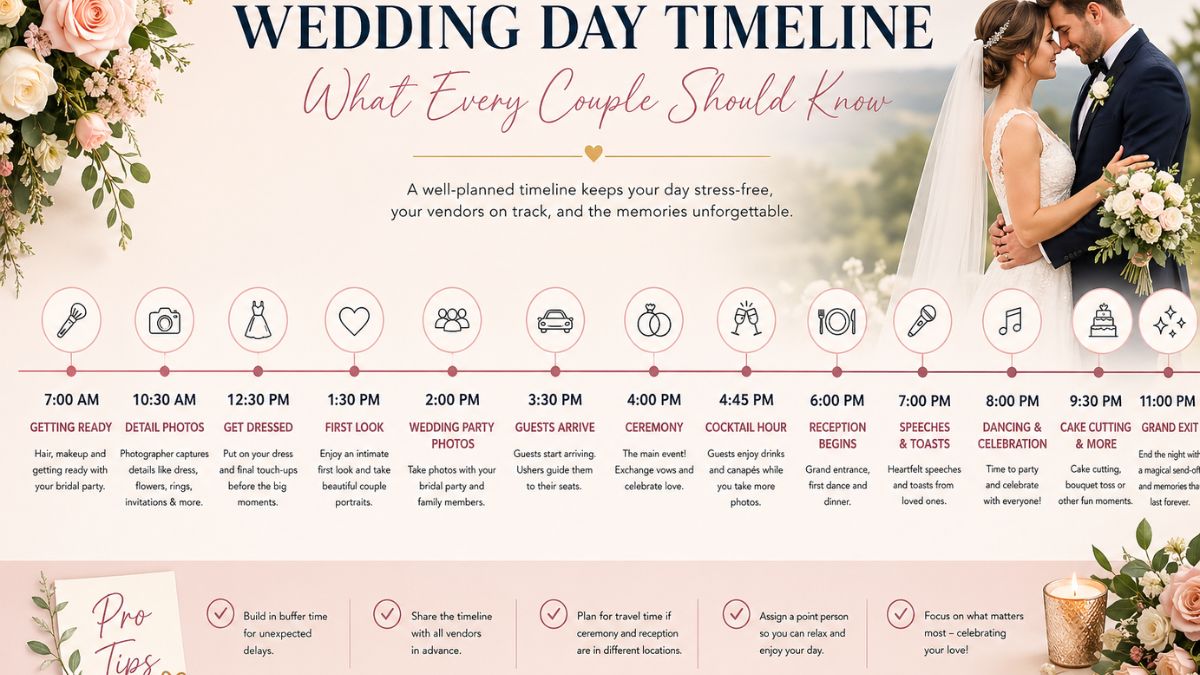
A wedding day can feel magical—or completely chaotic—depending on one thing: your timeline. In the US and UK, where weddings often involve multiple vendors, travel logistics, and tightly scheduled venues, having a structured plan isn’t optional—it’s essential. The difference between a smooth, stress-free day and a rushed, stressful one usually comes down to how well your timeline is built.
This guide breaks down a realistic, modern wedding day timeline that works for most couples, while giving you flexibility to adapt based on your style, venue, and traditions.
Why a Wedding Timeline Matters More Than You Think
Many couples underestimate how quickly the day moves. Hair runs late, transport gets delayed, photos take longer than expected—small issues stack up fast. A well-planned timeline:
- Keeps vendors aligned
- Prevents last-minute stress
- Ensures you don’t miss key moments
- Helps you actually enjoy your wedding
Think of it as your operational blueprint for the day.
The Ideal Wedding Day Timeline (Step-by-Step)
Here’s a typical timeline for a 4:00 PM ceremony, commonly used across the US and UK.
7:00 AM – Start Getting Ready
Hair and makeup should begin early, especially if you have bridesmaids. Professional stylists often need several hours depending on group size.
Pro tip: Always build in a 30–45 minute buffer for delays.
10:30 AM – Detail & Preparation Photos
Your photographer will capture:
- Dress, shoes, rings
- Invitation suite
- Getting-ready moments
These shots are often overlooked but add depth to your wedding album.
12:30 PM – Get Fully Dressed
Plan to be fully ready at least 1.5–2 hours before the ceremony. This allows time for:
- Final touch-ups
- Portraits
- Emotional moments with family
1:30 PM – First Look (Optional but Recommended)
A “first look” is when the couple sees each other before the ceremony. It’s increasingly popular in both the US and UK.
Benefits:
- Reduces nerves
- Saves time later
- Allows more photos before guests arrive
2:00 PM – Couple & Wedding Party Photos
Taking photos before the ceremony helps free up cocktail hour later. This is especially useful for:
- Large weddings
- Winter weddings (limited daylight)
3:30 PM – Guests Arrive
Guests typically begin arriving 20–30 minutes early. Make sure:
- Music is ready
- Ushers are in place
- Seating is organized
4:00 PM – Ceremony Begins
Most ceremonies last 20–40 minutes, depending on traditions and readings.
4:45 PM – Cocktail Hour
Guests enjoy drinks while you finish:
- Family photos
- Couple portraits
This is also a buffer period—don’t underestimate its importance.
6:00 PM – Reception Begins
Typical reception flow:
- Grand entrance
- First dance
- Dinner service
Keep things moving—long gaps can lose guest energy.
7:00 PM – Speeches & Toasts
In the US and UK, speeches are usually:
- Best man
- Maid of honor
- Parents
Keep total speech time under 30–40 minutes for better engagement.
8:00 PM – Party & Dancing
This is when the energy shifts. Your DJ or band takes over, and the celebration begins.
9:30 PM – Cake Cutting / Late-Night Moments
Optional but popular:
- Cake cutting
- Bouquet toss
- Late-night snacks
11:00 PM – Grand Exit
Sparkler exits, vintage cars, or simple goodbyes—end the night on a memorable note.
Common Timeline Mistakes to Avoid
Even well-planned weddings can go off track. Here are the most common mistakes:
Not Adding Buffer Time
Everything takes longer than expected. Always add extra time.
Overloading the Schedule
Too many events = rushed experience. Keep it simple.
Ignoring Travel Time
If your ceremony and reception are in different locations, account for transport delays.
Skipping a Coordinator
Even a day-of coordinator can make a huge difference in execution.
How to Customize Your Timeline
No two weddings are identical. Adjust your timeline based on:
- Season (shorter daylight in UK winters)
- Venue rules (strict time limits are common)
- Guest count (larger weddings need more time)
- Cultural traditions
Pro Tips for a Smooth Wedding Day
- Share the timeline with all vendors in advance
- Print copies for key people (planner, photographer, venue manager)
- Assign a point person (not you) to handle issues
- Stay flexible—small delays are normal
Final Thought
Your wedding day isn’t just a celebration—it’s a carefully coordinated event. A strong timeline gives you control without stress, allowing you to focus on what actually matters: enjoying the moment.
Plan it well, keep it realistic, and your day will feel effortless—even if a few things don’t go exactly as expected.