
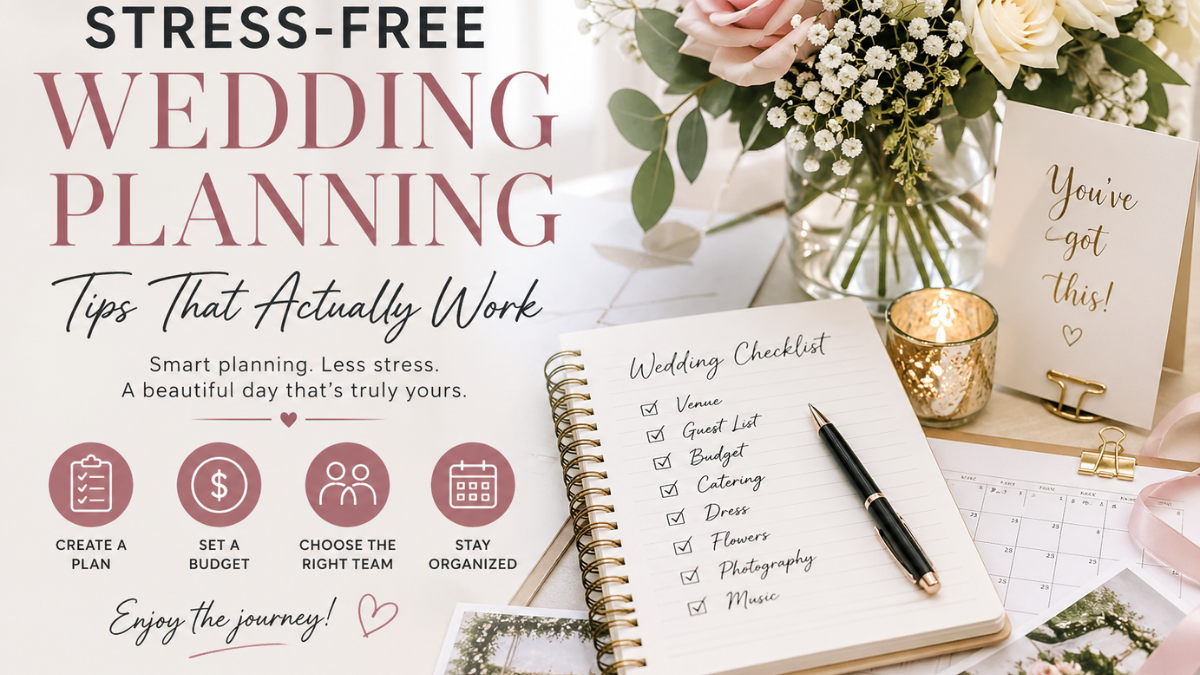
Planning a wedding should feel exciting, but for many couples in the US and UK, it quickly turns into spreadsheets, deadlines, family opinions, and budget pressure. The good news is that wedding planning does not have to be chaotic. With the right systems, clear priorities, and practical habits, you can stay organised and actually enjoy the process.
Modern couples are moving away from perfectionism and focusing on meaningful celebrations. That shift is helping many people plan smarter, spend better, and reduce unnecessary stress. If you are feeling overwhelmed, these proven tips can make the journey smoother from day one.
Start With Three Clear Priorities
Before booking anything, sit down together and decide what matters most. Every couple is different. Some care most about the venue, others want amazing food, live music, or beautiful photography.
Choose your top three priorities and build the budget around them.
Examples:
- Stunning venue
- Great guest experience
- Professional photos
- Luxury food menu
- Intimate atmosphere
- Live entertainment
When you know what matters, decision-making becomes easier and faster.
Set a Realistic Budget Early
Money stress is one of the biggest causes of wedding tension. Avoid surprises by creating a full budget before signing contracts.
Include:
- Venue hire
- Catering
- Photography
- Outfits
- Flowers
- Decor
- Entertainment
- Invitations
- Transport
- Emergency fund
Always leave 10–15% extra for unexpected costs. Hidden expenses often appear late in the process.
A realistic budget gives you confidence and prevents panic spending.
Create a Planning Timeline
One reason couples feel stressed is trying to do everything at once. Break the process into monthly goals.
12+ Months Before
- Set budget
- Choose date
- Book venue
- Draft guest list
9 Months Before
- Book photographer
- Book entertainment
- Choose theme
6 Months Before
- Order attire
- Finalise catering
- Send invitations
3 Months Before
- Confirm suppliers
- Seating plan
- Beauty trials
Final Month
- Final payments
- Confirm timings
- Pack essentials
Small steps feel manageable. Chaos usually comes from poor timing.
Keep the Guest List Under Control
Guest list pressure can create major stress. More guests usually means more cost, more logistics, and more opinions.
Ask yourselves:
- Do we truly want this person there?
- Have we spoken recently?
- Does adding more guests improve the day?
Many couples in the US and UK are choosing smaller weddings for exactly this reason. Intimate celebrations often feel warmer, more personal, and easier to manage.
Choose Vendors Carefully, Not Quickly
The cheapest option is not always the best value. Poor communication from vendors creates avoidable stress.
When booking vendors, look for:
- Strong reviews
- Fast replies
- Clear contracts
- Professional attitude
- Transparent pricing
- Backup plans
Reliable vendors reduce stress more than any planning app ever will.
Use One Planning System
Do not scatter information across notes, texts, screenshots, and emails.
Use one central system for:
- Budget tracking
- Guest list
- Contracts
- Payment dates
- Vendor contacts
- Checklist
This can be a spreadsheet, wedding planner app, or shared online document. One organised system saves hours and prevents mistakes.
Learn to Say No Politely
Family members often mean well, but too many outside opinions create confusion.
You do not need to accept every suggestion.
Use calm responses like:
- We appreciate the idea and will think about it
- We’ve decided to keep it simple
- We already have a plan for that
- Thanks, but we want this to reflect us as a couple
Boundaries are one of the most underrated wedding planning tools.
Focus on Guest Experience, Not Perfection
Guests rarely remember napkin colours or tiny decor details. They remember:
- Warm welcome
- Good food
- Smooth schedule
- Great music
- Happy couple
- Comfortable atmosphere
Do not waste energy chasing details nobody notices. Focus on how the event feels.
That is where memorable weddings are created.
Schedule Wedding-Free Time
If every evening becomes a wedding meeting, burnout happens quickly.
Set specific planning times each week and protect the rest of your schedule.
Examples:
- Wednesday night for planning
- Sunday morning for decisions
- No wedding talk on date nights
Healthy space keeps your relationship strong during the process.
Expect a Few Problems
No wedding goes 100% perfectly. A late delivery, weather issue, or seating change does not ruin the day.
Expect minor problems and decide in advance not to let them control your mood.
Couples who stay flexible enjoy the day far more than couples chasing perfection.
Delegate on the Wedding Day
You should not answer supplier calls while getting ready.
Assign trusted people for:
- Vendor questions
- Guest issues
- Gift collection
- Timeline checks
- Emergency kit
Choose one calm point person so you can stay present.
Remember the Real Purpose
A wedding is not a performance. It is a celebration of commitment, family, and shared joy.
When stress rises, come back to the reason you are doing this. The perfect centrepiece matters less than the promise you are making.
That mindset changes everything.
Final Thought
Stress-free wedding planning is not about doing more. It is about simplifying decisions, protecting your budget, choosing reliable people, and focusing on what truly matters.
The happiest couples are rarely the ones with the most expensive weddings. They are usually the ones who planned with intention, stayed flexible, and enjoyed the journey together.
If you build your wedding around meaning instead of pressure, the day becomes easier—and far more memorable.