
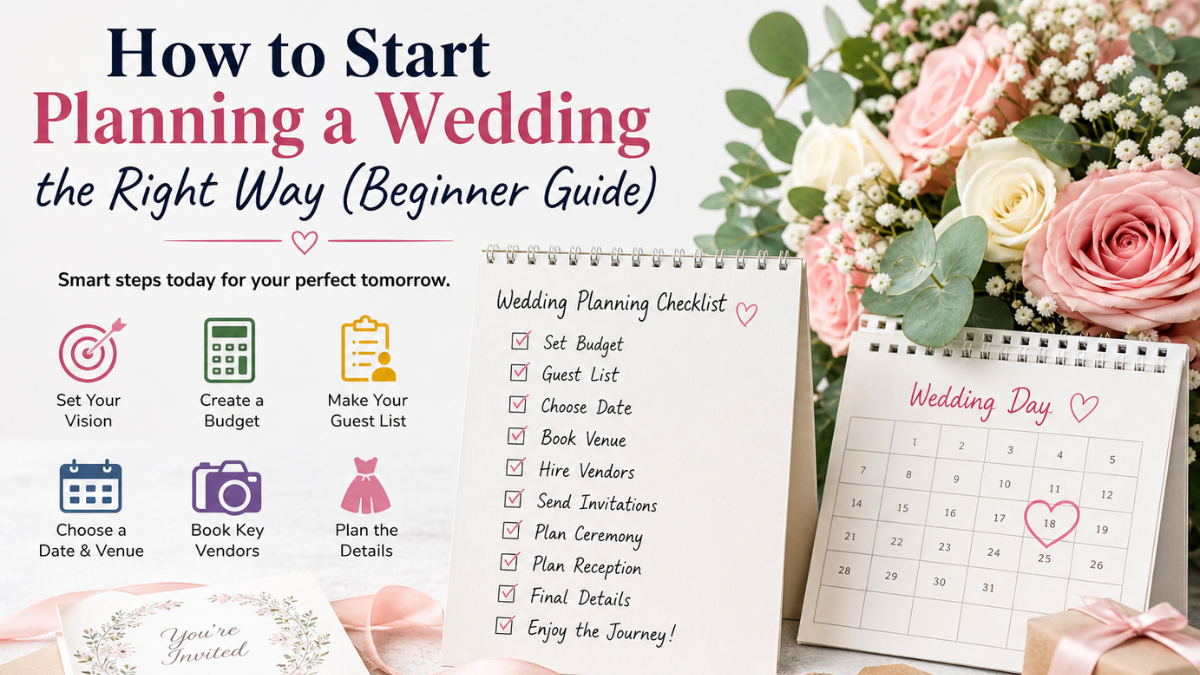
Planning a wedding can feel overwhelming at first. If you’re wondering How to Start Planning a Wedding the Right Way (Beginner Guide), you’re not alone. Many couples feel unsure about where to begin. The good news? With the right steps and a clear plan, you can turn this journey into an exciting and memorable experience.
Understanding the Basics of Wedding Planning
Why Early Planning Matters
Starting early gives you more control and flexibility. Popular venues and vendors often get booked months—or even years—in advance. Early planning also helps spread out costs, reducing financial stress.
Common Beginner Mistakes to Avoid
Many beginners jump straight into booking vendors without a plan. Others underestimate costs or delay decisions. Avoid these by setting clear priorities and staying organized from the start.
Setting Your Wedding Vision
Choosing a Theme and Style
Your wedding should reflect your personality. Do you want a romantic garden wedding or a modern city celebration? Decide on colors, décor, and overall vibe early.
Formal vs Casual Weddings
Formal weddings often include structured timelines and elegant attire, while casual weddings are more relaxed and flexible.
Indoor vs Outdoor Venues
Indoor venues offer stability, while outdoor settings provide natural beauty—but require backup plans for weather.
Creating a Realistic Budget
Breaking Down Wedding Costs
Your budget should include:
- Venue
- Catering
- Photography
- Attire
- Decorations
- Entertainment
Tips to Save Money Without Sacrificing Quality
- Choose off-season dates
- Limit guest count
- DIY simple decorations
- Compare vendor quotes
Drafting Your Guest List
Deciding Who to Invite
Start with close family and friends. Then expand if your budget allows.
Managing Plus-Ones and Family Expectations
Set clear rules for plus-ones early. Communicate openly with family to avoid misunderstandings.
Choosing the Perfect Date
Seasonal Considerations
Spring and fall are popular, but summer and winter weddings can be just as magical with proper planning.
Availability of Venues and Vendors
Always check availability before finalizing your date.
Booking Your Venue
What to Look for in a Venue
Consider:
- Capacity
- Location
- Amenities
- Accessibility
Questions to Ask Before Booking
- What’s included in the package?
- Are there restrictions?
- What is the cancellation policy?
Hiring Key Vendors
Photographer, Caterer, and Planner
These vendors play a huge role in your wedding experience. Choose professionals with good reviews and portfolios.
Contracts and Negotiations
Always read contracts carefully. Don’t hesitate to negotiate pricing or services.
Wedding Timeline and Checklist
Month-by-Month Planning Guide
- 12 months: Set budget and venue
- 9 months: Book vendors
- 6 months: Send invites
- 3 months: Final fittings
- 1 month: Confirm details
Staying Organized
Use digital tools or wedding planning apps to track progress.
Picking Wedding Attire
Bride and Groom Outfit Planning
Start early to allow time for fittings and alterations.
Accessories and Final Touches
Shoes, jewelry, and hairstyles complete your look.
Designing Invitations and Stationery
Save-the-Dates and Invitations
Send save-the-dates early, especially for destination weddings.
RSVP Management
Track responses efficiently using online tools.
Planning the Ceremony
Writing Vows
Personal vows add emotional value to your ceremony.
Ceremony Flow
Plan the sequence—from entrance to exchange of rings.
Organizing the Reception
Food, Music, and Entertainment
Choose a menu that suits your guests. Music sets the mood—consider a DJ or live band.
Seating Arrangements
Arrange seating to encourage conversation and comfort.
Final Preparations Before the Big Day
Confirming Vendors
Double-check all bookings one week before the wedding.
Packing Emergency Kits
Include essentials like safety pins, makeup, and snacks.
Wedding Day Tips for Success
Staying Calm and Present
Take moments to enjoy your day—it goes by quickly!
Delegating Responsibilities
Assign tasks to trusted friends or a planner so you can relax.
FAQs About Wedding Planning
1. How early should I start planning my wedding?
Ideally, start 12–18 months in advance for better availability and less stress.
2. What is the first step in wedding planning?
Set your budget and guest list before anything else.
3. How do I stick to my wedding budget?
Track expenses and prioritize what matters most to you.
4. Should I hire a wedding planner?
If your budget allows, a planner can save time and reduce stress.
5. How many guests should I invite?
Base this on your budget and venue capacity.
6. What are the most important vendors to book early?
Venue, photographer, and caterer should be your top priorities.
Conclusion
Learning How to Start Planning a Wedding the Right Way (Beginner Guide) doesn’t have to be complicated. By breaking the process into simple steps—setting a vision, managing your budget, and staying organized—you can create a wedding that truly reflects your love story. Remember, it’s not about perfection; it’s about celebrating a meaningful moment in your life.